
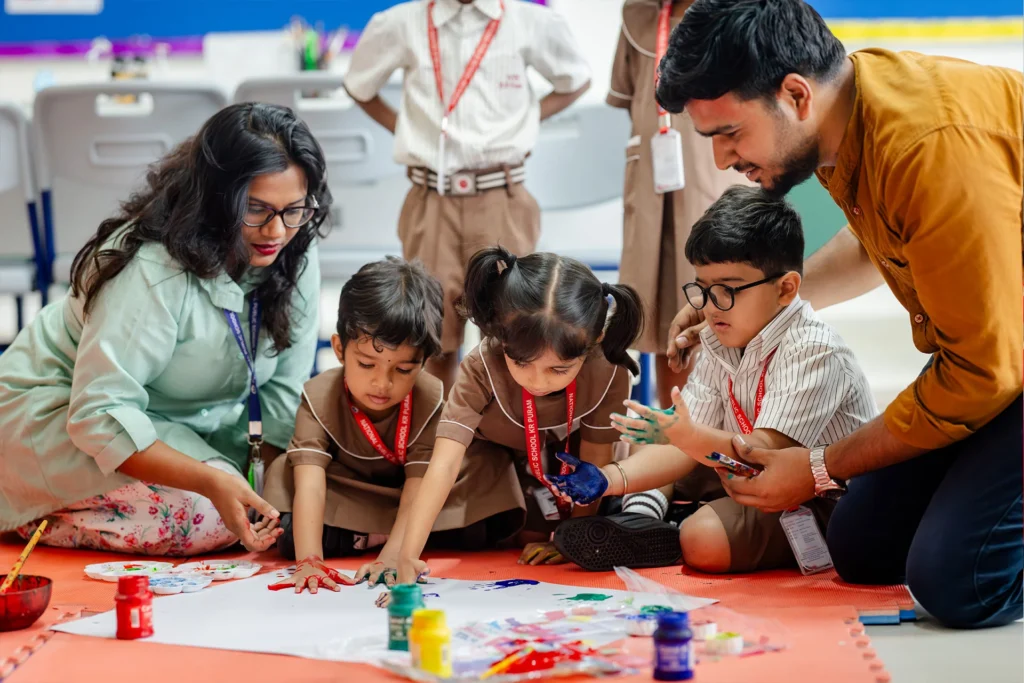
One of the crucial phases your child goes through in their growing years is the early formative years. This is when your child needs to learn some key skills that combine academic foundations, emotional awareness, and real-life abilities. Developing these skills early enhances learning capacity, confidence, and social relationships among children. Hence, parents and schools together should combine to ensure that these important skills for kids are taught to students in simple yet effective ways.
Introduction
When it comes to your child’s development, years before age 10 are among the most important. This is where basic life skills for kids are imparted, including building habits, thinking patterns, and social abilities that shape how they learn and interact with the world.
However, when it comes to education, experts emphasize not only academic knowledge but also emotional, social, and practical life skills, which help children become independent learners, confident communicators, and responsible individuals at an early age.
Skills every child must learn before age 10 must not just include basic skills but also communication skills and creativity that can help them grow academically, socially, and emotionally while preparing them for future learning and real-world challenges.
Life Skills for Children
- Strong Communication Skills
It is key for children to learn how to express themselves clearly and listen actively. Effective communication improves friendships, classroom participation, and confidence.
- Reading Habits
Developing a regular reading habit not only helps in building vocabulary but also imagination and comprehension.
- Emotional Intelligence
Understanding emotions, both their own and others’, helps children manage frustration, resolve conflicts, and develop empathy.
- Problem-Solving Ability
Parents and teachers should motivate children to think through problems and explore solutions independently.
- Creativity and Imagination
Creative thinking through art or music helps children develop innovation and flexible thinking, which can enhance their problem-solving skills and encourage them to approach challenges with a unique perspective.
- Basic Digital Literacy
Living in a digital world makes it mandatory that children learn about safe internet use, responsible screen habits, and basic technology awareness.
- Teamwork and Collaboration
Team-building activities can educate children on how to cooperate, share responsibilities, and respect different viewpoints.
- Effective Time Management
Simple routines like finishing homework on time or organizing school materials teach responsibility and discipline.
- Basic Life Skills
Practical skills such as tidying up, organizing belongings, helping with simple chores, or basic self-care build independence and help students gain good visibility within society.
- Curiosity and Critical Thinking
Encouraging questions and exploration helps children understand the world around them and develop analytical thinking.
Building Future-Ready Children
Research in child psychology and education consistently shows that a holistic approach to skill development during early childhood leads to better academic performance and stronger emotional resilience later in life.
- Experienced faculty from global education institutions emphasize that children do not succeed only through memorization or exam scores but by establishing a balance between intellectual, social, and emotional development.
- Expertise gained through frequent research highlights that before age 10, children absorb habits, behaviours, and problem-solving patterns quickly.
- Parents often worry about academic pressure, but experts recommend focusing equally on communication skills, empathy, creativity, and independent thinking.
- Moreover, early exposure to teamwork and responsibility prepares children for real-world situations. Children who learn to express their thoughts clearly and manage their emotions are better prepared to face academic challenges and build healthy relationships.
Conclusion
The formative years have always been very challenging when it comes to child development. Hence, if you want your child to develop these essential skills early, choosing the right learning environment matters. Start a conversation with the educators at National Public School, KR Puram, today and discover how the right guidance can shape your child’s future and help him or her to become a champion.
FAQ
- Why are early childhood skills important before age 10?
Skills developed before age 10 form the foundation for learning, behaviour, and emotional growth. Early development helps children adapt better to academic and social environments. - What is the most important skill for young children?
In addition to some of the other basic skills, communication and emotional intelligence are often considered the most essential because they influence relationships, learning, and confidence. - How can parents teach life skills to children?
Parents can teach skills through daily routines, reading time, problem-solving activities, storytelling, and encouraging curiosity. - Should children learn digital skills before age 10?
Yes, but with guidance. Teaching safe internet habits and responsible device use prepares children for modern learning environments. - Do schools play a role in skill development before age 10?
Absolutely. Schools, supported by parents, help children practice collaboration, discipline, creativity, and structured learning in a supportive environment.
References
- Harvard Center on the Developing Child – Early Childhood Skills
- UNICEF Parenting Guide – Essential Skills for Children
- Edutopia – Life Skills Kids Need Before Middle School
- Verywell Family – Life Skills Every Child Should Learn
- Parenting Science – Cognitive Skills Development in Children




 Call Now